



CATEGORIES
RECENT POSTS



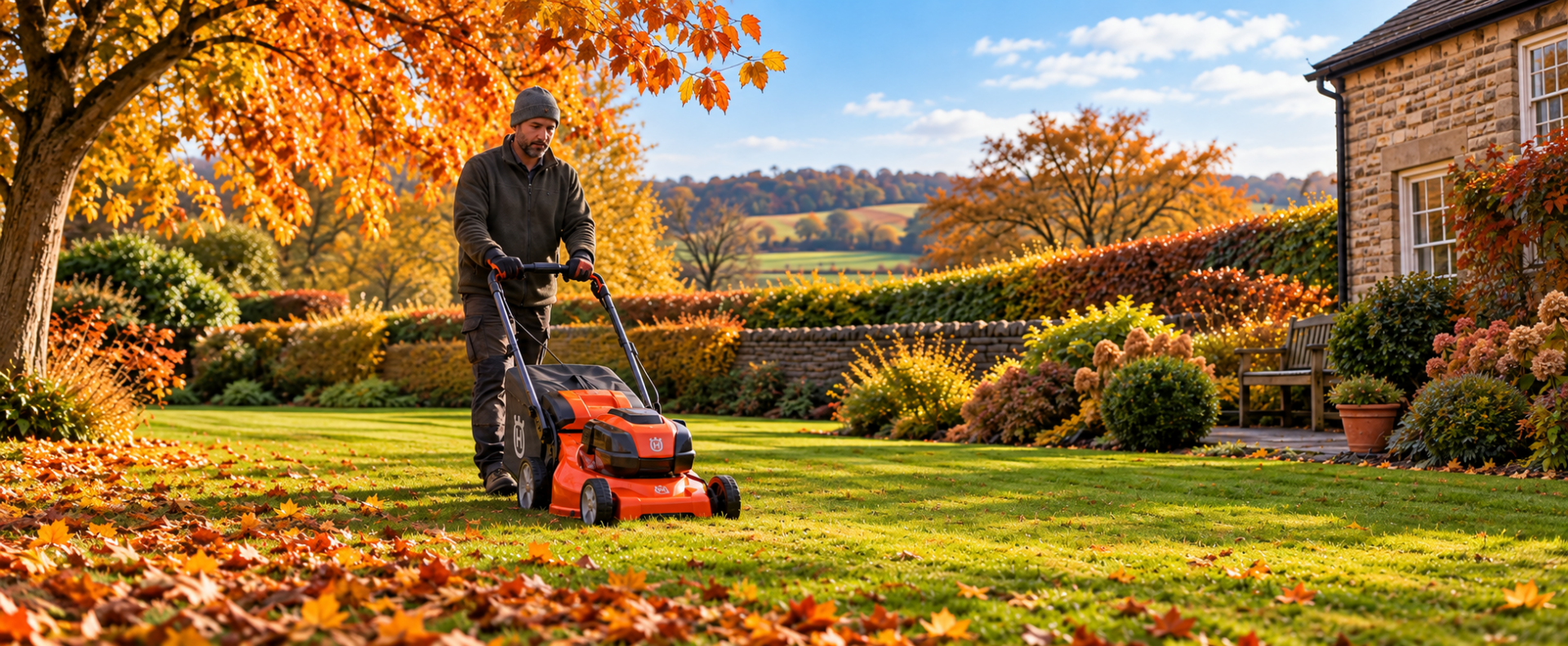
TLDR: There’s no fixed date for the final lawn cut of the year. In the UK, keep mowing while the grass is still growing and conditions are dry, frost-free and firm underfoot. Raise the cutting height slightly for autumn and winter, avoid cutting more than a third of the grass blade at once, and stop once growth has virtually ceased. In mild weather, an occasional light cut may still be needed into November or even December.
When Should You Stop Mowing the Lawn for Winter? How to Judge Your Final Cut
One of the most common questions gardeners ask as autumn arrives is when should you stop cutting grass? The simple answer is that there isn’t a fixed date.
In the UK, your last lawn cut of the year should be determined by how quickly the grass is growing, together with the temperature, rainfall, soil conditions and the weather forecast – not simply by what month it is.
In a mild autumn, your lawn may continue growing well into November and sometimes even December. In a colder year, growth may slow considerably earlier.
So, rather than putting the lawn mower away on a particular date, here’s how to decide when it’s time for the last grass cut of the year.
When Should You Stop Cutting Grass in the UK?
For many UK gardens, regular mowing begins to slow during October and November as temperatures fall and daylight hours shorten.
However, this doesn’t necessarily mean you should stop mowing altogether.
Grass can continue to grow whenever conditions are sufficiently mild. This means the answer to when to stop cutting the lawn can vary considerably from one year – and even one part of the UK – to another.
A lawn in a mild, sheltered garden in southern England may continue growing long after a lawn in a colder or more exposed location has effectively become dormant.
Instead of looking at the calendar, look at your lawn.
If the grass is still visibly growing and conditions are suitable for mowing, it can usually benefit from an occasional cut.
What Temperature Does Grass Stop Growing?
Grass growth slows considerably as temperatures fall.
Rather than suddenly stopping on a particular day, growth becomes progressively slower as soil and air temperatures decrease.
That’s why deciding when to stop mowing the lawn in the UK is largely about observation.
If you mowed your lawn two weeks ago and it has barely grown since, that’s a good indication that the mowing season is coming to an end.
If it’s noticeably longer again, there’s no reason to declare the previous mow your final cut simply because it’s November.
How Do You Know It’s Time for the Last Lawn Cut Before Winter?
Before carrying out the last lawn cut before winter, consider four things:
1. Is the grass still growing?
If the lawn has noticeably increased in height since your previous cut, another mow may be worthwhile.
2. Is the ground firm enough?
Avoid mowing waterlogged or extremely soft ground. A heavy mower can leave ruts, compact wet soil and damage the lawn.
3. Is the grass reasonably dry?
Autumn dew and rain can make finding a dry mowing window more difficult. Whenever possible, wait until the grass has dried.
4. Is frost forecast or already on the lawn?
Never mow a frozen or frost-covered lawn. Frozen grass blades are much more susceptible to damage.
When growth has virtually stopped and suitable mowing conditions are becoming increasingly rare, you’ve probably reached the grass last cut of year.
What Height Should the Final Cut of the Year Be?
It’s tempting to give the lawn an extremely short final cut so it looks neat throughout winter.
Don’t.
For the last grass cut of the year, it’s generally better to leave the grass slightly longer than you would during peak summer growing conditions.
For a typical domestic lawn, a mowing height of around 4–5cm is a sensible target, although the ideal height will depend on the grass type and condition of the lawn.
Leaving a little extra length gives the grass more leaf area and helps it cope with lower light levels and colder conditions.
Cutting too short can unnecessarily stress the lawn at exactly the time of year when recovery is becoming slower.
A useful rule is to avoid removing more than around one-third of the grass blade in a single mow.
Should You Cut Grass in Winter?
Should you cut grass in winter? Occasionally, yes.
There isn’t a rule saying lawn mowers must remain in the shed between December and March.
During a particularly mild UK winter, grass may continue growing slowly. If your lawn becomes noticeably long, a light trim can help keep it tidy.
The important thing is choosing the right conditions.
Cutting Grass in the Winter – When Is It Safe?
If you’re cutting grass in the winter, choose a mild, dry day when:
- The grass isn’t frozen or frosty
- The ground isn’t waterlogged
- The grass itself is reasonably dry
- Temperatures aren’t extremely low
- The lawn is genuinely long enough to need mowing
Raise the mower cutting height and take off only a small amount.
Winter mowing should be about maintaining the lawn rather than achieving a close summer finish.
Can You Mow Wet Grass?
Ideally, avoid it.
Wet grass tends to bend rather than cut cleanly and can clump underneath the mower deck. The mower may also leave a less even finish.
More importantly during autumn and winter, saturated soil may be damaged by repeated foot traffic and the weight of the mower.
If there has been prolonged rain, wait for both the lawn surface and the ground underneath to improve.
A slightly untidy lawn for another week is usually preferable to damaging wet turf.
Can You Mow Frosty Grass?
No. If there is frost on the lawn, wait.
Walking or mowing over frozen grass can damage the blades. You may notice footprints or mower tracks remaining visible afterwards as damaged grass turns brown.
Even if a frosty morning develops into a sunny day, don’t immediately get the mower out. Give the frost time to completely thaw and check that the ground is suitable before mowing.
What If My Grass Is Still Growing in November?
Keep mowing it when necessary.
This is where following a fixed date for when to stop cutting grass UK gardens can cause confusion.
November doesn’t automatically mean mowing season is over.
If temperatures remain mild and the lawn continues to grow, occasional mowing is perfectly reasonable. Simply reduce the frequency and raise your cutting height compared with summer.
Instead of mowing every week, you might find the lawn only needs cutting every two or three weeks.
Let the grass tell you when it needs cutting.
Can I Still Mow the Lawn in December?
In a mild winter, potentially.
If December arrives and your lawn is still actively growing, you can give it a light cut provided the ground is firm, the grass is dry enough and there is no frost.
You don’t need to keep mowing simply because the grass has grown by a tiny amount, though.
At this time of year, patience is often more important than achieving a perfectly manicured finish.
If conditions aren’t right, wait.
Why You Shouldn’t Leave Grass Extremely Long Over Winter
Although cutting too short isn’t recommended, leaving a lawn excessively long isn’t ideal either.
Very long grass can flatten in wet weather, reduce airflow around the plants and leave the lawn looking patchy when spring arrives.
The objective of your last lawn cut of the year isn’t therefore to scalp the lawn or leave it untouched for months.
Aim for a sensible middle ground: tidy, evenly cut grass with enough length to remain healthy through winter.
Preparing Your Lawn Mower After the Final Cut
Once you’ve decided you’ve probably completed your last lawn cut before winter, it’s a good opportunity to look after your mower.
Before storing it, remove accumulated grass from the mower according to the manufacturer’s instructions and check the blade for wear or damage.
For petrol lawn mowers, follow the manufacturer’s recommendations regarding fuel and winter storage.
For cordless lawn mowers, remove the battery where recommended and store batteries in accordance with the manufacturer’s instructions.
Winter is also an excellent time to have your lawn mower serviced.
Waiting until the first warm weekend of spring can mean joining the rush of gardeners who suddenly discover their mower needs attention.
At Radmore & Tucker, our experienced workshop team can help keep your garden machinery ready for the season ahead.
When to Cut Grass After Winter
The next question is naturally when to cut grass after winter.
Again, don’t rely entirely on the calendar.
Wait until:
- The lawn has started actively growing
- The ground is reasonably firm
- The grass isn’t saturated
- There is no frost on the lawn
- Conditions are suitable for mowing
Your first spring cut should be gentle.
Set the mower higher than you would during summer and remove only the top of the grass. You can gradually lower the cutting height over subsequent mows as growth becomes stronger.
So, When Do You Stop Cutting Grass?
If you’re wondering when do you stop cutting grass, the best answer is: when the grass stops growing and conditions are no longer suitable for mowing.
For many UK lawns, mowing will become much less frequent during October before potentially finishing sometime in November. But mild autumn and winter weather can push the last lawn cut of the year into December.
Don’t mow simply because it’s a dry Saturday, and don’t stop simply because the calendar says it’s November.
Judge the lawn itself.
Quick Final-Cut Checklist
Before mowing late in the season, ask yourself:
- ✓ Is the grass still actively growing?
- ✓ Is the lawn free from frost?
- ✓ Is the ground firm rather than waterlogged?
- ✓ Is the grass reasonably dry?
- ✓ Can I mow without cutting it too short?
If the answer is yes, another light mow may be beneficial.
If growth has stopped or the conditions aren’t suitable, it’s time to put the mower away and wait for spring.
Get Your Lawn Mower Ready for Next Season
Whether you’re making the last grass cut of the year or preparing for spring, having the right lawn mower makes maintaining your garden considerably easier.
At Radmore & Tucker, we stock a wide range of petrol, cordless and electric lawn mowers from leading garden machinery manufacturers, with expert advice available to help you choose the right machine for your garden.
And if you already own a mower, don’t forget that winter is a great opportunity to arrange servicing and maintenance before the spring rush.
Need a new lawn mower or advice on maintaining your existing machine? Explore the lawn mower range at Radmore & Tucker or speak to our experienced team for expert advice.
About the Author: Amy

