



CATEGORIES
RECENT POSTS



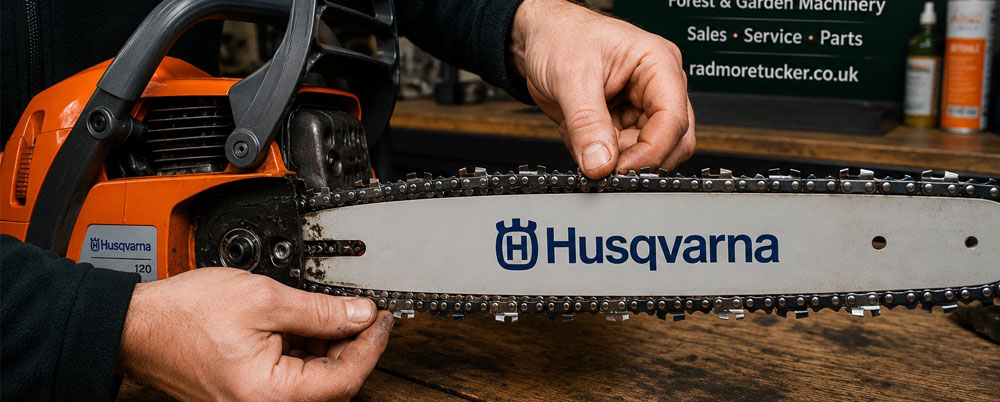
This chainsaw chain guide explains pitch, gauge, drive links and other chain numbers in simple terms. It helps customers identify the correct replacement chainsaw chain, understand why size matters for safety and performance, and measure their existing chain correctly before buying parts for STIHL, Husqvarna, Oregon and other saws.
Chainsaw Chain Numbers Explained: Pitch, Gauge and Drive Links Made Simple
If you have ever looked at a chainsaw chain packet and wondered what all the numbers mean, you are not alone. Understanding chainsaw chain size can seem confusing at first, but once you know the basics it becomes much easier to choose the correct replacement chainsaw chain for your saw.
At Radmore & Tucker in Exeter, one of the most common questions we hear is:
“What chainsaw chain do I need?”
In this chainsaw chain guide, we explain chainsaw chain numbers, pitch, gauge, drive links and how to measure chainsaw chain correctly.
Why Chainsaw Chain Size Matters
Using the correct chainsaw chain size is important for:
- Safe operation
- Smooth cutting performance
- Reduced wear on your chainsaw
- Proper chain tension and lubrication
The wrong chain may not fit the guide bar correctly and could damage the saw or become unsafe to use.
Chainsaw Chain Numbers Explained
Most chainsaw chains are identified using three measurements:
- Chainsaw chain pitch
- Chainsaw chain gauge
- Chainsaw drive links
These three numbers determine the correct replacement chainsaw chain for your machine.
1. What Is Chainsaw Chain Pitch?
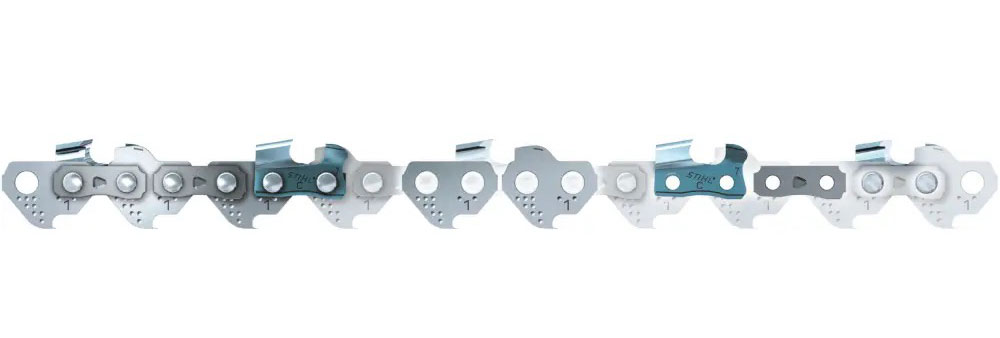
Chainsaw chain pitch refers to the spacing between the chain links.
It is measured by:
- taking the distance between three rivets,
- then dividing by two.
Common chainsaw chain pitch sizes include:
- 1/4″
- .325″
- 3/8″
- .404″
The pitch affects:
- cutting speed,
- smoothness,
- and the type of work the saw is designed for.
Smaller pitch chains are generally smoother and lighter, while larger pitch chains are designed for more aggressive cutting.
2. What Is Chainsaw Chain Gauge?
Chainsaw chain gauge is the thickness of the drive link that sits inside the guide bar groove.
Common chainsaw chain gauge sizes are:
- .043″ (1.1mm)
- .050″ (1.3mm)
- .058″ (1.5mm)
- .063″ (1.6mm)
The gauge must match the guide bar exactly.
If the chain gauge is too thin:
- the chain can wobble.
If it is too thick:
- it simply will not fit the bar.
3. What Are Chainsaw Drive Links?
Chainsaw drive links are the small teeth on the underside of the chain that sit inside the guide bar groove and are pulled around by the sprocket.
The number of chainsaw drive links determines the overall chain length.
For example:
- 56 drive links
- 64 drive links
- 72 drive links
Two chains can have the same pitch and gauge but different drive link counts.
How Do I Measure a Chainsaw Chain?
One of the most searched questions online is:
“How do I measure a chainsaw chain?”
To measure correctly, you need all three measurements:
- Pitch
- Gauge
- Drive links
How To Measure Chainsaw Chain Pitch
The easiest method:
- look on the guide bar,
- owner’s manual,
- or existing chain packaging.
If no markings are visible:
- Measure the distance between three rivets
- Divide the measurement by two
How To Measure Chainsaw Chain Gauge
You can:
- check the guide bar markings,
- use vernier calipers,
- or refer to the chainsaw model specifications.
How Do You Measure a Chain for a Chainsaw?
To measure the full chainsaw chain:
- Find the pitch
- Find the gauge
- Count the chainsaw drive links
All three are required when ordering a replacement chainsaw chain.
Chainsaw Size Guide
Here is a simple chainsaw size guide:
| Chainsaw Use | Common Pitch | Common Gauge |
|---|---|---|
| Small pruning saws | 1/4″ | .043″ |
| Domestic chainsaws | .325″ or 3/8″ low profile | .050″ |
| Professional forestry saws | 3/8″ | .058″ or .063″ |
Chainsaw Chain Types
There are several chainsaw chain types available depending on the application.
Full Chisel Chain
- Fast cutting
- Best for clean timber
- Used by professionals
Semi-Chisel Chain
- More forgiving in dirty wood
- Longer edge retention
- Popular for general use
Low Profile Chain
- Reduced kickback
- Common on homeowner chainsaws
Carving Chains
- Narrow nose bars
- Precision wood carving work
What Is a Chainsaw Depth Gauge?
The chainsaw depth gauge (sometimes called the raker) controls how much wood the cutter tooth removes on each pass.
The chainsaw chain depth gauge is very important because:
- if too high, cutting becomes slow,
- if too low, the chain becomes aggressive and unsafe.
Correct sharpening includes maintaining the proper chainsaw depth gauge height.
What Chainsaw Chain Do I Need?
If you are unsure what chainsaw chain you need, the easiest options are:
- check the guide bar markings,
- bring the chain into store,
- or contact our team with your chainsaw model number.
At Radmore & Tucker Exeter, we stock a wide range of:
- Husqvarna chainsaw chains
- STIHL chains
- Oregon replacement chains
- Guide bars and accessories
Our team can quickly identify the correct replacement chainsaw chain for your machine.
Need Help Choosing the Right Chainsaw Chain?
Whether you need advice on:
- chainsaw chain pitch,
- chainsaw chain gauge,
- chainsaw drive links,
- or how to measure chainsaw chain correctly,
the team at Radmore & Tucker Exeter are happy to help.
Visit us in store or contact our experts for advice on the best chainsaw chain for your saw.
About the Author: Amy

